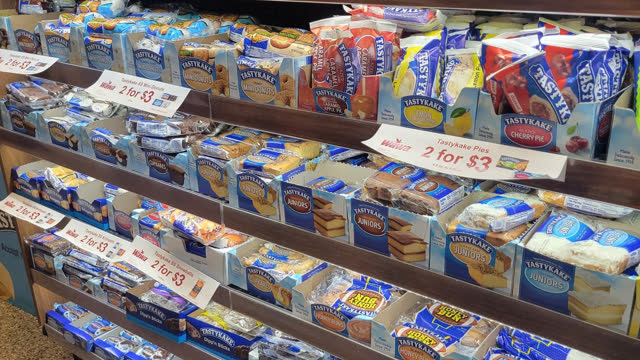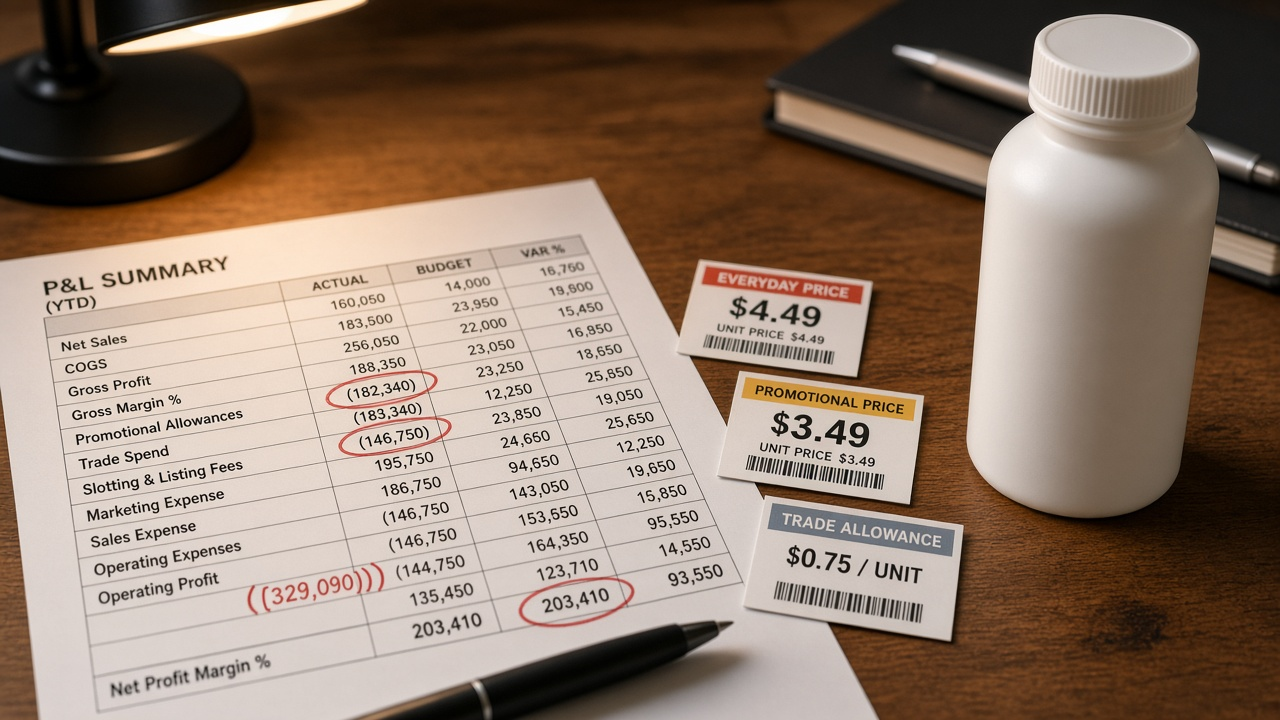
The short answer: Trade spend changes the price or pays someone else to move product, which makes it a P&L decision, not brand marketing. Slotting, free fills, scan-downs, and deductions stack up and erase contribution margin quietly, so separate trade spend from brand spend and judge each dollar by what it buys.
Most founders do not lose their margin on a bad ad campaign.
They lose it one “temporary” BOGO, one slotting invoice, one scan-down that never came off, and one deduction they never modeled, all booked somewhere that looks like growth and feels like marketing.
I have run real P&Ls in CPG, home fragrance, supplements, beverage, and food. The pattern is the same whether you are pitching a regional chain or living inside a national reset calendar. Trade spend gets sold internally as brand-building: “We’re investing in the shelf.” “We’re driving trial.” “We’re matching the category.” Then quarter-end arrives, units look fine, and contribution margin is gone.
Trade spend is not marketing. It is a pricing decision with a longer invoice cycle. Treat it like creative spend and you will grow the wrong number.
What trade spend actually is (and what it is not)
Marketing creates demand you can defend at your price. Trade spend changes the price, or pays someone else to move product that was not going to move on its own.
Those are different jobs.
Brand marketing is pack that earns the pause, a claim that holds up, discovery that puts you in the consideration set, and a story strong enough that a shopper will pay what the economics require. Trade spend is off-invoice allowances, bill-backs, slotting, free-fills, scan-downs, coupon funding, markdown money, display fees, and the long list of deductions that show up after the PO.
One builds preference. The other rents velocity.
Renting velocity is sometimes correct. A well-timed promo that protects a reset, clears a seasonal pack, or buys a facing you can actually support can be the highest-ROI dollar in the building. The problem starts when founders call every discount “marketing” so nobody has to own the P&L math.
If you cannot say what the promo is buying in units, days, and net contribution after retailer margin, freight, and the deduction stack, you are not investing. You are hoping.
For how price has to work for the retailer and the brand before any promo enters the room, start with How to Price a Consumer Product So Retailers Say Yes. Promo on a broken price architecture just accelerates the bleed.
How promo dollars kill contribution margin quietly
The damage is rarely one dramatic deal. It is a stack.
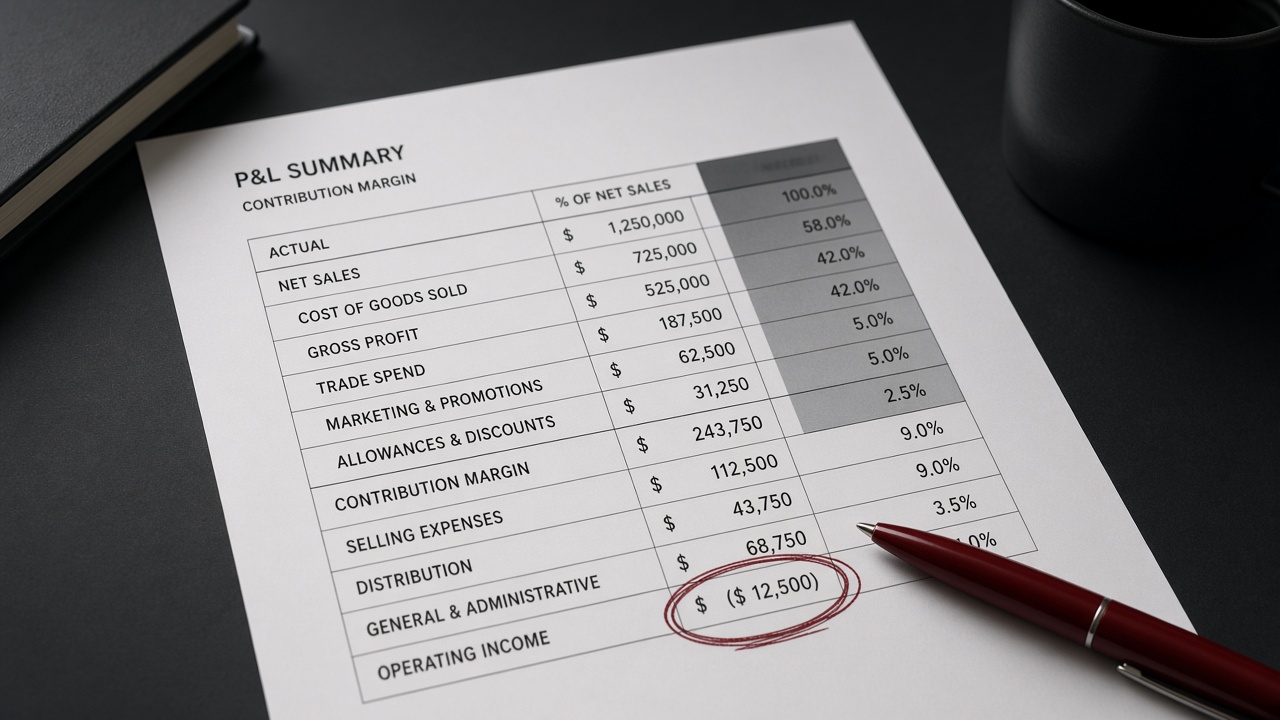
You price for a margin you never get to keep. The wholesale looks healthy on the line sheet. Then slotting, free-fill, a “market development” fund, and a quarterly scan-down take four to twelve points before anyone talks about freight or spoilage. Founders keep staring at gross margin. The business lives or dies on contribution after the stack. Gross is vanity. Contribution is the number. That is the same trap spelled out in The Retail Pricing Math Most Founders Get Wrong. DTC sticker logic and wholesale reality are not the same exercise.
“Temporary” becomes the new base. A four-week 2-for deal trains the shopper and the buyer. Pull it and velocity drops, not because the brand died, but because you taught the aisle your real price was the promo price. Now every quarter needs another event to look like last quarter. That is not brand-building. That is a habit you funded.
Scan data lies if you only read units. Units up, revenue up, founder celebrates. Contribution per unit down more than volume grew. You bought your own growth rate with margin. In supplements and beverage especially, promo-chasing shoppers rarely convert to full-price loyalists at the rate the deck promised. You paid for tourists.
Markdown money is not optional once you are in. Retailer margin requirements do not pause because your brand is “premium.” When the item softens, someone funds the markdown. If you did not reserve for that by account, the deduction arrives as a surprise and you call it a relationship cost. It is a pricing cost. Account-level margin and markdown planning belongs in the model before the pitch. See Retailer Margin Requirements and Markdown Strategy.

Deductions hide in the noise. Short-ships, pricing errors, unauthorized promo, spoilage disputes: some valid, some creative. Without a weekly deduction rhythm and a named owner, trade spend becomes a plug. Plugs do not show up in the brand story. They show up in cash.
Quiet is the point. Nobody hosts a postmortem for a point of margin that disappeared across six invoices. They host a postmortem when the brand “suddenly” cannot fund inventory.
The lies founders tell themselves about promo
I hear the same five. They sound strategic. They are usually avoidance.
“We need trial.” Trial of what: a product people will rebuy at full price, or a product that only moves when it is cheaper than the private label next to it? If the value proposition only works at 30% off, you do not have a trial problem. You have a product-market-price problem. Discounting will not invent fit; it will obscure the miss. Product-Market Fit Isn’t a Feeling is the cleaner frame: the buy has to make sense at the price you need.
“The category is promo-driven.” Some categories run hot. That does not mean your brand can afford the same calendar as the incumbent with twice your volume and a contract manufacturing base you do not have. Matching their promo depth with your cost structure is how small brands fund large brands’ shelf rent.
“The buyer required it.” Sometimes true. Often true after you walked in without a promo architecture and a walk-away. Buyers negotiate into empty space. If your only lever is “yes,” you will fund their margin plan with your contribution.
“We’ll make it up on volume.” Volume makes up margin only when contribution per unit stays positive and capacity does not break. I have watched founders celebrate a warehouse club win that left them busier and poorer. Volume is not a strategy. Contribution at volume is.
“It’s marketing.” This is the most expensive rebrand in consumer products. Marketing is accountable to demand and brand equity. Trade spend is accountable to net revenue and cash. Put promo under the marketing budget and you remove the only people who should be forced to defend the P&L.
None of those lines make you a bad founder. They make you a normal one in categories where every meeting rewards activity. The fix is not less ambition. It is cleaner language.
A promo architecture you can actually run
Stop asking “Should we promo?” Start asking “What is this dollar buying, for how long, and what is leftover?”
- Separate brand spend from trade spend in the P&L. Different lines. Different owners. Different success metrics. Brand spend is judged on preference, discovery, and full-price conversion. Trade spend is judged on incremental contribution and cash, not vibes.
- Model contribution by account after the promo stack. Retailer margin, distributor cut if any, planned allowances, expected deductions, freight, and spoilage. If the account only works with hero assumptions, it does not work. This is the same discipline as account-level markdown planning: one model, not a hope and a line sheet.
- Cap depth and duration before the meeting. Decide the deepest discount you will fund and the longest you will run it. Put it in writing. A buyer will always ask for more. Your job is to know the number where the deal stops being a deal.
- Require an exit. Every promo needs a planned return to base price and a read on what happens if velocity falls. If you cannot afford the post-promo hangover, you cannot afford the promo.
- Read lift against contribution, not against ego. Units up 20% with contribution down 25% is not a win. It is a louder way to shrink. Tie every event to incremental dollars kept, not incremental cases shipped.
- Protect everyday price as a brand asset. In food, fragrance, and supplements, shoppers learn fast. A brand that is always “on” is not premium. It is a clearance mindset with nicer packaging.
Run that for one quarter and you will feel the difference: fewer events, clearer yes/no, and a contribution line that stops drifting.
Where this shows up hardest by category
Supplements: Promo trains price-sensitive regimen shoppers. If subscription or repeat only works at discount, your LTV math was fiction.
Beverage: Display and scan-downs can look like rocket fuel. Without a plan for full-price weeks, you are renting cooler space at a loss.
Food: Spoilage and markdown interact. Promo that overships a short code is not growth. It is a future deduction with interest.
Home fragrance: Seasonal and gifting calendars invite deep events. Protect the franchise SKUs; do not teach the aisle that your hero scent is only worth buying at 40% off.
Broader CPG: Slotting and free-fill feel like table stakes. They are still priced points. Pay them from a model, not from optimism.
Across all of them, the commercial mistakes that look like “hustle” are usually P&L leaks with better branding, a theme that shows up again and again in The 7 Biggest Go-to-Market Mistakes CPG Founders Make.
The takeaway
If trade spend is living in your marketing narrative, move it back to pricing and ops where it belongs.
Promo dollars do not quietly kill margin because retailers are villains. They kill margin because founders confuse rented velocity with earned demand, and because nobody forced the contribution math before the yes.
Marketing builds a reason to pay. Trade spend changes what they pay. You need both, sometimes in the same quarter. You do not need them confused.
Own the stack. Cap the depth. Demand an exit. Judge every event on dollars kept, not cases shipped. That is how promo stops being a slow leak and starts being a tool.
Retail does not reward the brand that discounted the most. It rewards the one that knew which dollars were brand, which dollars were trade, and which “investments” were just margin leaving the building with a smile.