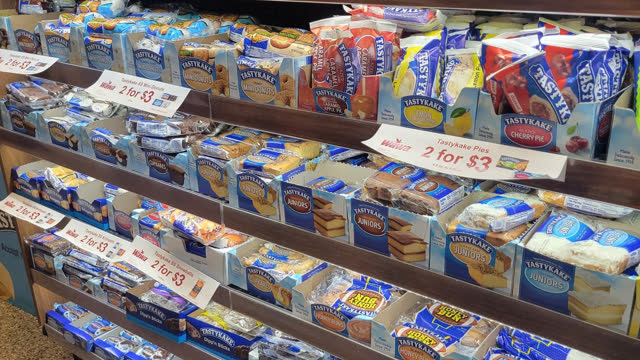
The short answer: A price built from COGS alone can look profitable on a spreadsheet and fail on the shelf. Test your price from both directions: what the shopper will accept, what margin the retailer requires, and the contribution margin you keep after variable selling costs.
Pricing a consumer product is not a cost-plus exercise.
Your price tells the shopper what the product is worth. It tells the retailer whether the item belongs on the shelf. It tells you whether the business can fund inventory, marketing, trade spend, and the next production run.
Those three messages have to agree.
Most founders start with one question: “What does it cost to make?” That matters. It is also only the first input. A price built from COGS alone can leave you with a product that looks profitable on a spreadsheet and fails at retail. The shelf price may feel too high for the shopper, too low for the category, or too thin to support what the retailer expects to earn.
The better question is:
What price makes sense for the shopper, the retailer, and the brand at the same time?
Your price is not just a number attached to the product. It is the clearest expression of your value proposition, and the first test of whether your go-to-market plan works.
Our founder has spent 34 years making pricing calls inside operating businesses, where margin decides inventory, payroll, promotion, and growth. That is the lens for everything below.
Pricing starts with the buying decision, not the factory invoice
COGS tells you what the product costs to make and deliver. It does not tell you what the product is worth to the buyer.
A supplement may cost more because of better ingredients, stronger testing, or a more convenient format. A beverage may earn a premium because it solves a specific usage problem. A home fragrance product may command more because the packaging, scent profile, and gifting occasion support a different level of value.
The shopper never sees your production quote. They see:
- The benefit
- The package and format
- The claims and proof
- The competing products nearby
- The expected experience
- The price
All of that together is price-to-value perception. If the value is unclear, a lower price usually does not fix it. It can make the product look less credible, shrink your margin, and leave you with less money to explain the value.
Establish the value proposition before you finalize the price. Not “What can we afford to charge?” Ask instead: “What problem does this solve, for whom, and what will make the price feel reasonable at the moment of purchase?” Product-Market Fit Isn’t a Feeling goes deeper on how to test that.
The three numbers that should shape your price
Before you build a retail pitch or commit to a production run, pressure-test these three:
- The shopper's acceptable shelf price: what your target buyer will pay in this category, for this format, at this level of benefit.
- The retailer's required margin: what the retailer needs to earn after buying, stocking, promoting, and selling your product.
- Your contribution margin: what remains after COGS, freight, trade spend, promotions, and other variable selling costs.
They have to work together. If one breaks, the model breaks.
Three examples, with illustrative numbers only. A product priced at $29.99 DTC may not work at a $14.99 retail price once retailer and distributor margins come out. A product that works at a $5.99 shelf price may leave the brand too little contribution margin to fund promotions. A premium product may have healthy margins and still give the shopper no reason to pick it over a familiar alternative.
None of that is a traffic problem. It is a pricing and positioning problem.

Why pricing from COGS alone fails
Cost-plus feels responsible. Say the product costs $3 to make, so you add a markup and set the price. (Illustrative numbers.)
Retail does not operate on your markup. Retailers weigh the whole equation:
- What will the product sell for?
- What margin does that shelf price create?
- Does the price fit the category?
- Can the item support promotions?
- Will shoppers understand the difference?
- Does it earn enough velocity to justify its space?
If the product costs $3 and you price it at $6, you may believe you have a 50% gross margin. That $6 may not leave room for the retailer, the distributor, promotions, freight, and your own operating costs. The same unit can be profitable in a DTC order and unprofitable in wholesale.
Retail growth adds costs that founders overlook:
- Retailer margin
- Distributor margin, where one applies
- Introductory discounts
- Free fills or promotional allowances
- Freight and handling
- Returns and deductions
- Retail media or co-op requirements
The answer is not always a higher price. If the category will not carry the increase, you may need to cut COGS, change the pack size, simplify the format, shift the channel, or sharpen the value proposition. That is why pricing belongs inside your go-to-market plan, not at the end of product development. The 7 Biggest Go-to-Market Mistakes CPG Founders Make lists pricing from COGS as mistake number one for a reason.
Work backward from the shelf
Test a retail price from both directions.
Start with the shopper and the shelf:
- What do comparable products cost?
- Where do premium, mainstream, and value products sit?
- Which price points are familiar in the category?
- Does your product offer enough value to rise above the reference price?
- Will the price feel credible when the shopper compares in three seconds?
Then walk backward through the channel. If the target shelf price is $9.99 (an example), the retailer may need to buy at a meaningful discount to earn its expected margin. If a distributor sits between you and the retailer, another margin comes out. What remains has to cover your fully loaded COGS and your variable selling costs. The Retail Pricing Math Most Founders Get Wrong shows that walk with a full worked example.
It is basic math with a strategic edge. If the only way to protect your margin is to price far above the category, the market is telling you something. The product may cost too much to make, be aimed at the wrong channel, or not be different enough to earn the premium.

The margin conversation founders skip
Most founders know their gross margin. Far fewer know their contribution margin after the costs it takes to sell through retail.
Gross margin is selling price minus COGS. Contribution margin goes further. It asks what is left after the variable costs of generating and fulfilling the sale. For a retail product that can include:
- Trade promotions
- Introductory offers
- Retail media
- Distributor costs
- Freight
- Sales commissions
- Damages, deductions, and returns
You do not have to predict every cost perfectly. You do have to model realistic assumptions before you promise a buyer a price.
- If the product only works at full price with no promotion, it may not be retail-ready.
- If it needs constant discounting to move, the issue may be value communication, packaging, placement, or fit, not price alone.
- If it has no margin left after the first order, more distribution adds activity without improving the business.
Not more doors, but better economics per door. And watch how promotion eats into it: Trade Spend Is Not Marketing shows how a few “temporary” deals turn into a permanent price.
If you want a second pair of eyes on your price stack before you commit to a run, grab 15 minutes with us and bring your line sheet and your COGS.
Price should reinforce the value proposition
A price cannot make up for weak positioning. If you ask a shopper to pay more, the product needs a clear reason to exist at that price, and that reason should show up in the product, packaging, claims, merchandising, and promotion.
Value can come from:
- Function: a meaningful benefit that solves a defined problem
- Quality: ingredients, materials, formulation, or performance people can understand
- Convenience: a format that saves time or makes use easier
- Experience: taste, scent, texture, design, or ritual
- Trust: testing, proof, transparency, and credible brand behavior
- Relevance: a product built for a specific customer rather than everyone
The strongest brands do not lean on price as the only difference. They make the difference visible. That matters most in supplements and CPG, where a shopper may compare several products with similar claims. Your price has to match the proof available at the shelf.
Premium pricing without premium evidence is not strategy. It is wishful thinking.
A practical pricing test before you commit
Before you approve a final price, ask five questions:
- Does the shelf price fit the category and the shopper's expectation?
- Can the retailer earn an acceptable margin without making the product unaffordable?
- Does the brand keep enough contribution margin after variable selling costs?
- Can the product support promotions without training shoppers to wait for discounts?
- Can the value proposition be understood before the shopper moves on?
If any answer is no, change the model before you increase distribution. That may mean changing the formula, packaging, pack size, channel, price, or positioning. It may also mean delaying a retail launch until the economics can carry it.
That is not slowing down. It is protecting the business from expensive momentum. When the price clears the test, the next step is account economics, which we cover in Retailer Margin Requirements and Markdown Strategy, and then what buyers want to see in Retail Readiness: The 4 Things Buyers Want to See.

Price for the business you are building
A workable price does more than create a transaction. It gives the shopper a credible reason to buy, the retailer a reason to stock, and the brand enough margin to keep operating and improving.
Not the lowest possible price, but the right price for the value. Not a number pulled from COGS alone, but a decision tested against the shelf, the channel, and the shopper.
At Vantage Business Consulting, we work through this with founders in supplements, beverages, food, CPG, and home fragrance before the production run is locked, while changing the price is still cheap.