The short answer: Your hero SKU can hide a weak assortment. Line extensions and SKU creep dilute the brand, steal shelf and cash from the items that earn, and confuse buyers about what you stand for. Name your hero in writing and make every new item clear a contribution bar before it launches.
Most founders do not lose their brand on a bad logo.
They lose it one “must-have” flavor, one seasonal twin of the hero, one size variant the buyer never asked for, and one line extension that looked like growth in a deck and looked like clutter on the shelf.
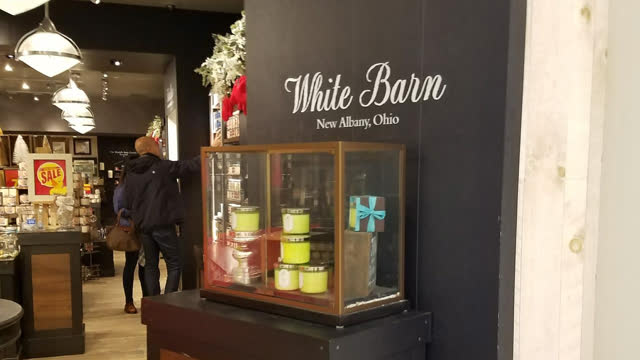
I have run assortment decisions in CPG, home fragrance, supplements, beverage, and food. My first brand management job in CPG was at Dial, on Twenty Mule Team Borax. That brand was a cash cow. Leadership kept wanting line extensions. None of them matched the hero. So we protected it, milked the core, and refused to dilute what actually printed. Bath & Body Works later taught me the same lesson when the aisle is honest: a real franchise SKU earns the facing. The pattern I see with founders is the opposite of honesty. The hero prints. Everything around it borrows that glow. Velocity looks fine in rollup. Contribution by SKU tells a different story. Ops is drowning in codes. The buyer cannot explain what the brand is in one sentence.
Your hero SKU is lying to you. Not because the product is bad. Because it is good enough to hide a lineup that does not earn its keep.
What a hero SKU really is
A hero is not your favorite item. It is not the one with the prettiest pack. It is the SKU that earns repeat, carries contribution after trade and freight, and teaches the shopper who you are.
In fragrance, that is the scent people come back for without a promo crutch. In supplements, the regimen SKU that holds at full price. In beverage and food, the flavor that turns without teaching the aisle you only exist on deal. In broader CPG, the item a buyer would keep if the planogram got cut tomorrow.
Hero means earning power, not ego.
Borax taught me that early. A hero you keep trying to “improve” with lookalike twins is often a hero you are slowly teaching the shopper to ignore. Protecting the cash cow is not lack of innovation. It is knowing which SKU pays for the experiments that actually earn a test.
If you cannot name contribution per unit, weeks of supply, and reorder behavior for that code without opening three tabs, you do not have a hero. You have a hope with a UPC.
For the product-market-price frame that has to sit under any assortment bet, start with Product-Market Fit Isn’t a Feeling. Extensions on a soft hero do not create fit. They multiply the miss.

How assortment dilutes the brand
Dilution rarely arrives as a dramatic reset. It arrives as helpfulness.
Extensions that do not earn. A second size, a third scent, a “limited” that never left. Each one needs a facing, a forecast, a case pack, a QC path, and a story in the buyer meeting. If the extension does not beat a clear contribution bar after the stack, it is not growth. It is rent charged against the hero’s reputation.
Lookalike clutter. Shoppers pause for clarity. When every facing is a near twin with a different adjective on the label, you did not widen the franchise. You made the aisle harder to read. I have watched fragrance walls and supplement bays where the brand owns six inches of confusion instead of two inches of conviction.
Ops complexity that never shows up in the brand deck. More SKUs means more purchase orders, more short-ships, more deduction noise, more warehouse slots, more “which code for that banner?” moments. Complexity is a tax. It does not care that the deck called it “assortment architecture.”
Buyer confusion. Retailers do not owe you a seminar on your lineup. They need a coherent ask: what stays, what turns, what you will support. When your sell-in is twelve codes and your scan data says three do the work, you taught the buyer that you cannot edit. Editing is a brand skill. So is saying no before the PO.
Velocity vanity versus contribution. Units up on a weak variant can look like momentum. Contribution down across the set is the quieter truth. Promo can prop a soft SKU for a quarter. That is not assortment strength. That is trade spend pretending to be product strategy.
Shelf is finite. Cash is finite. Attention is finite. Every facing you give a weak twin is a facing you did not give the item that actually pays the bills. Account economics and markdown reality do not pause for sentimental SKUs. See Retailer Margin Requirements and Markdown Strategy for why shelf space is priced whether you model it or not.
The lies founders tell themselves about assortment
I hear the same five. They sound like category strategy. They are usually avoidance.
“Retailers want more options.” Sometimes they want depth in a franchise that already turns. Often they want fewer, clearer codes that do not create voids and markdowns. Offering twelve before you have proven three is not customer-centric. It is fear of picking.
“We need the line extension for discovery.” Discovery of what: a better reason to buy the hero, or a reason to ignore it? If the extension only moves when it is next to a glowing parent and still loses on contribution, you built a tourist trap.
“The competitor has fifteen SKUs.” The competitor may also have their cost structure, their slotting history, and their ability to fund dead weight. Matching their count with your cash is how small brands fund large brands’ experiments.
“Cutting will look like we are shrinking.” To whom? A buyer who sees clean turns and a founder who sees a shorter forecast usually prefer the cut. Activity is not assortment. Coherence is.
“We will fix velocity with better packaging later.” Pack will not rescue a SKU that never had a job. Fix the job first: who buys it, at what price, against what alternative, and why it deserves a facing over the hero’s second facing.
None of those lines make you a bad founder. They make you a normal one in categories where every meeting rewards more. The fix is not less ambition. It is cleaner editing. The commercial mistakes that look like “hustle” show up again in The 7 Biggest Go-to-Market Mistakes CPG Founders Make.
A practical assortment discipline you can run
Stop asking “What else can we launch?” Start asking “What earns its facing, and what is borrowing the hero’s light?”
- Name the hero in writing. One primary SKU (or a tight franchise set) with contribution, turn, and reorder criteria. If two items both claim hero status and neither clears the bar alone, you do not have two heroes. You have indecision.
- Set a contribution floor by SKU after the real stack. Retailer margin, freight, expected trade, spoilage where it applies. Gross on the line sheet is vanity. Contribution after the stack is the number. Price architecture still has to work before assortment gets clever. See How to Price a Consumer Product So Retailers Say Yes.
- Cap new codes until the hero is defended. No seasonal twin, no size run, no “just one more flavor” until the core facing is stable on scan and on cash. Ambition after proof beats ambition as a substitute for proof.
- Score extensions on incremental dollars kept, not incremental cases shipped. If the extension cannibalizes the hero and net contribution falls, you did not expand. You relocated demand into a worse margin shape.
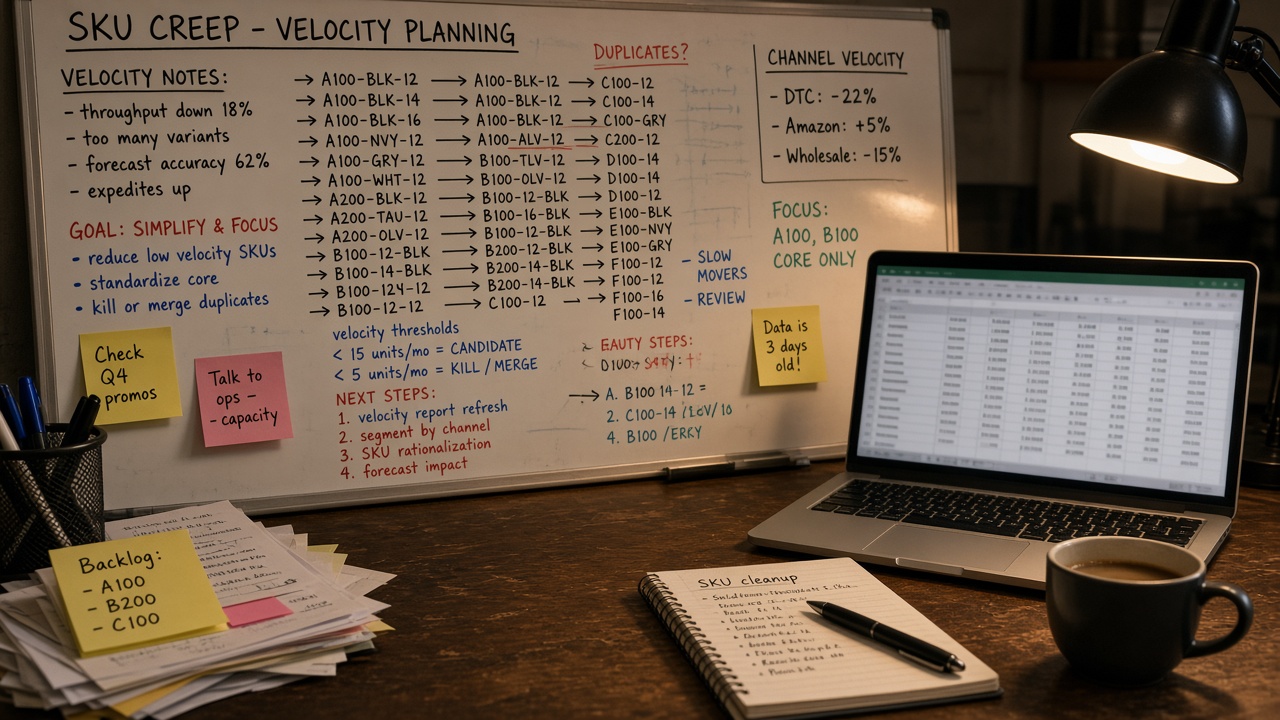
- Build a cut list on a calendar. Every quarter, list the bottom SKUs by contribution and by operational drag. Decide discontinue, harvest, or fix-with-a-date. “Fix someday” is how creep becomes culture.
- Sell coherence to the buyer. A short assortment with a clear hero, a support SKU that earns, and a walk-away on the rest is a stronger meeting than a wall of variants and a shrug. Buyers remember brands that edit.
Run that for two quarters and the shelf starts telling the truth again. So does the P&L.
If you are staring at your own lineup and cannot tell which SKUs are earning the facing, grab 15 minutes with me and we will walk the contribution file together.

Where this shows up hardest by category
Home fragrance: Seasonal and gifting calendars invite twin after twin. Protect the franchise scent. Do not teach the aisle that your brand is a mist wall with no center.
Supplements: Regimen SKUs and “stacks” multiply fast. If the hero only works when three weak companions share the shelf, you do not have a system. You have dependency.
Beverage: Flavor sprawl looks like energy. Cooler space is rented. Dead flavors still cost slots, samples, and sell-in time.
Food: Short code plus SKU creep is a markdown machine. Every weak twin is a future deduction with packaging.
Broader CPG: Retailer-facing count is not brand strategy. Facing count without contribution discipline is how brands get wide and thin at the same time.
The takeaway
If your hero SKU is carrying the brand story while the rest of the assortment steals shelf, ops, and cash, believe the contribution file, not the lineup photo.
Assortment dilutes when founders confuse more codes with more brand, and when nobody forces a cut list before the next “must-launch” meeting.
A hero earns the pause, the reorder, and the contribution. Everything else either supports that honestly or gets in the way. Line extensions are optional. Brand coherence is not.
Name the hero. Cap the creep. Score incremental dollars kept. Put weak SKUs on a dated cut list. Sell a short, clear assortment like it is a strength, because it is.
Retail does not reward the brand with the most variants on the planogram. It rewards the one that knew which SKUs earned the facing, which ones were lying by association, and which “innovations” were just margin and attention leaving the building with a new UPC.