The short answer: Differentiation is a benefit the shopper cares about, that competitors do not already offer, that you can prove, that is hard to copy, and that shows up on the pack in seconds. Map the competition the way the shopper sees it, write your benefit in one sentence, and test it hard before your next buyer meeting.
“Why does the shelf need this?”
Every buyer asks some version of that question, out loud or not. Shoppers ask it too, only faster. They scan a shelf or a page of search results, and in a few seconds they either see a reason to pick you or they reach for what they already know.
Why “better quality” is not a difference
Most founders believe their product is better. Many are right. The trouble is that a lot of brands on the shelf say the same thing. “Better quality,” “all natural,” “clean ingredients,” and “great taste” are table stakes in many categories. They get you considered. They do not get you chosen.
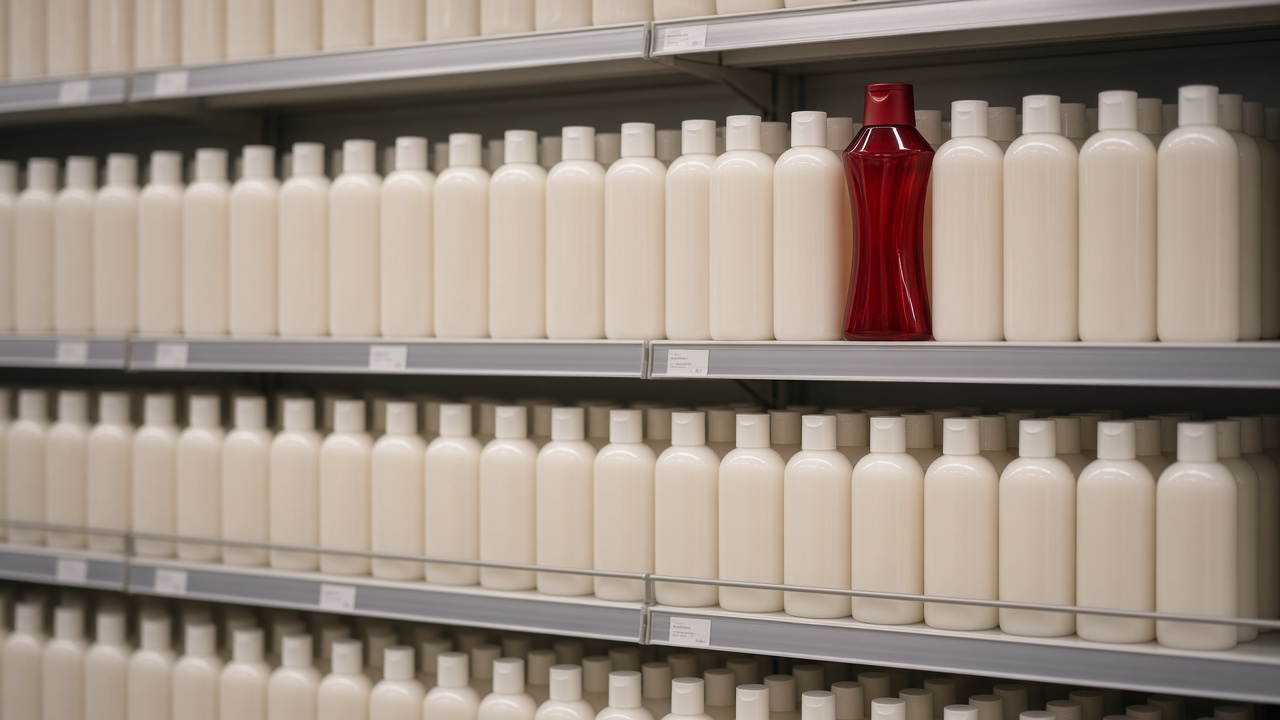
A buyer reviewing your item is asking a practical question: if this takes a slot, what does it add that the current set does not? If your answer is a version of what is already there, you are not a new reason for the shopper to visit the aisle. You are another option, and another option usually has to win on price or promotion, which is an expensive way to live.
Feature, benefit, and reason to believe
Before you can judge whether you are different, separate three things founders often blend together.
- Feature. What the product has: an ingredient, a format, a process, a pack size.
- Benefit. What the shopper gets: steady energy through the afternoon, a clean kitchen in less time, a room that smells fresh when guests walk in.
- Reason to believe. Why the shopper should trust the benefit: a proven ingredient level, a test result, a visible design choice, a source or method they can check.
A hypothetical example: say you make a protein bar. “20 grams of protein” is a feature. “Keeps you going until lunch” is a benefit. The protein and fiber content, shown clearly on the pack, is the reason to believe. Shoppers buy the benefit. The feature and the reason to believe help them trust it.
Step 1: Map the competitive set the way the shopper sees it
Founders tend to define competitors as brands that look like them. Shoppers do not. They compare you with anything that solves the same need on that trip.
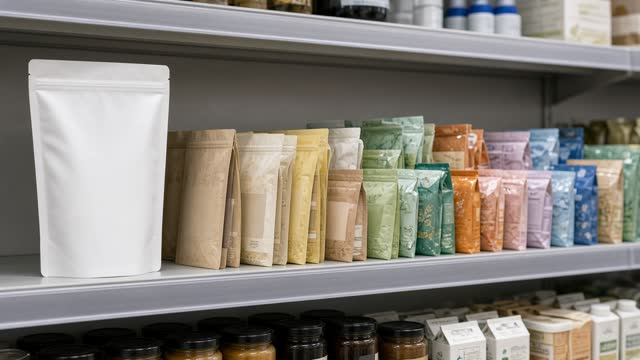
Say you make a hypothetical sparkling functional drink. In the shopper’s mind, you compete with other functional drinks, and also with coffee, energy drinks, kombucha, and plain sparkling water. A candle competes with diffusers, sprays, and wax melts. Write down your direct competitors, then the substitutes, then the option of buying nothing at all. Stay with the shopper’s view, not your industry’s.
Step 2: Walk the shelf and the search results
Go to the stores where you sell or want to sell, and stand where the shopper stands. Then do the same online. Search the way a shopper would, on retailer sites and marketplaces, and study the first page of results.
For each competitor, write down the main benefit claim, the one the pack or listing leads with. Note the price, the size, and the reason to believe they use. You are building a simple grid. Often the claims cluster around the same few ideas. That cluster tells you where not to stand.
Step 3: Write your one benefit in one sentence
Now write your benefit. One benefit, one sentence, in words a shopper would use. Not a list of five features. Not a mission statement.
A useful format: “For [shopper], [brand] gives [benefit] because [reason to believe].” If you cannot finish the sentence, or it takes several tries and still sounds like the grid from step 2, you have learned something important.
Step 4: Run the five tests
Take your sentence and test it honestly. It needs to pass all five.
- Is it important to the shopper? A benefit nobody shops for is trivia. Ask real shoppers, read reviews in your category, and listen for the words they use.
- Is it different from what is on the shelf? Check it against your grid. If two competitors already lead with it, it is not yours.
- Is it believable or provable? You need a reason to believe the shopper can see, and support you can show a buyer.
- Is it ownable or hard to copy? A benefit tied to a process, a sourcing relationship, a format, or a brand world is harder to copy than one ingredient anyone can add.
- Can it show up on the pack in seconds? If it takes a paragraph to explain, the shopper will not read it. Your benefit has to land from arm’s length or in a thumbnail.
If you want a second set of eyes on your benefit sentence before your next buyer meeting, grab 15 minutes with us.
Step 5: Find the white space
Look at your grid again, and this time look for what is missing. Which needs does nobody on the shelf lead with? Which shoppers are underserved? Which occasions get ignored? White space is only worth claiming if shoppers care about it, so run any idea back through the five tests.
Step 6: Check that product, pack, price, and claims agree
A benefit only works when everything around it supports it. That is brand and product alignment. If you promise premium, does the price say premium? If you promise convenience, is the pack easy to open, carry, and store? If you promise a result, does the product deliver it every time, and can your claims back it up?
When one piece contradicts the benefit, shoppers notice, even if they cannot say why. We go deeper on lining these up in Product-Market Fit Isn’t a Feeling: How to Align Your Brand, Product, and Price to the Buying Decision, and on what your price signals in Price Is a Positioning Tool: How to Build It Into Your Brand Strategy.
Ways to differentiate besides the formula
A better formula is one way to stand apart, and often the easiest to copy. Look wider.
- Format. A powder, a stick, a spray, or a single serve where the category sells only one form.
- Occasion or usage. Built for a moment the category ignores, like travel, the gym bag, or bedtime.
- Target shopper. Made for a shopper the leaders overlook.
- Sensory. A taste, texture, or scent profile shoppers notice and remember.
- Pack or convenience. Easier to open, pour, store, refill, or carry.
- Origin or story. Where it comes from or how it is made, when that matters to the shopper.
- Price or value tier. A clear spot above or below the set, with a reason for it.
- Service or channel. Where and how shoppers can buy it, such as a subscription or a channel competitors do not serve well.
Traps that make a difference disappear
- Differentiating on something shoppers do not value. A unique process means little if the shopper never asked for it and cannot see the result.
- Copying the category leader. Matching the leader’s look and claims makes you the smaller version of a brand shoppers already trust.
- Claims you cannot support. Claims need substantiation, and some, especially for supplements, are subject to regulatory rules on what you can say and how. Check your claims with qualified counsel before they go on a pack or a page.
- Being different for the sake of it. A strange color or odd format that does not deliver a benefit only adds confusion. Our founder’s approach is to protect hero SKUs rather than dilute them with line extensions that do not match the brand, and the same thinking applies here: a difference should strengthen your core, not distract from it.
Your difference will not last forever
Even a strong benefit wears down. Competitors notice what works and copy it. New brands enter with your claim plus one more. What felt distinct at launch can look ordinary a few years later.
Rerun this assessment at least once a year. Walk the shelf again, rebuild the grid, and put your benefit sentence back through the five tests. Catching the drift early gives you time to respond before a buyer points it out.
What to do this week
Start with four steps.
First, list your competitive set the way your shopper sees it, including substitutes.
Second, walk one shelf and one page of search results, and write down each competitor’s lead benefit, price, and reason to believe.
Third, write your benefit in one sentence and run it through the five tests. Be honest about any test it fails.
Fourth, check that your product, pack, price, and claims all tell the same story.
Then decide what your results mean for the brand. If your benefit is still distinct, protect it and make it louder on the pack. If it has blended into the shelf, you face a bigger choice: rebrand, refresh, or milk the brand while loyal shoppers keep buying. We walk through that decision in Time to Rebrand, Refresh, or Milk It? Questions for Maturing Products and Categories.
To talk through how different your brand really is, grab 15 minutes with us.