The short answer: Your customers already describe your products better than most marketing teams. Collect their reviews and posts, get written permission before using them in new places, and put their exact words on your website, ads, sales flyers, social posts, and help pages. Then check if sales increase.
Most consumer brands sit on great proof they never use: customer reviews on their store pages, tagged photos on social media, and customer support emails explaining why they love the product. Meanwhile, the team pays to write sales language that says the exact same thing, but less convincingly.
We think that approach is wasteful. A customer’s real words are the most believable sales tool a business can use. The work is simply gathering them, getting permission, and putting them where they help bring in revenue.
Where reviews and user posts come from
Reviews and user posts come from four places: your own site, retailer listings, social channels, and direct messages or emails from customers.
- Your own website. Reviews collected after purchase using a review tool or follow-up email. You control how and where these are displayed.
- Online stores and marketplaces. Reviews on retail websites where your product is listed. These belong to those specific platforms, so check their rules before copying text to your own site.
- Social channels. Tagged posts, comments, unboxing videos, and stories. This is where the best photos and video live.
- Direct messages and emails. Help tickets, emails sent to customer support, or feedback forms.
If you want more of them, ask. A short, plain request a week or two after delivery, timed to when the product has had a chance to work, does more than any discount.
How to ask for permission to reuse them
Always get written permission before using a customer’s words, photos, or videos in a new place.
This is practical guidance, not legal advice. Website terms, local laws, and advertising standards all apply, so it is best to have your legal representative review your process. Here is how to handle it in practice.
- Reviews on your own website. Your review guidelines should clearly state, in simple terms, that you may feature submitted feedback in your marketing. Ensure these terms are easy to see when someone leaves a review.
- Social media posts. Send a message to the person, explain specifically where you plan to feature their post (such as a sales page, an ad, or a printed flyer), and ask for clear permission. Keep a record of their reply.
- Sponsored posts or free samples. If you provided free product or paid someone to post, any reused content must keep the note stating it was sponsored. Do not remove that note.
- Never alter the core message. You may shorten text for space, but you must not change the meaning or quote only positive parts of a mixed review to mislead buyers.
Maintain a simple permission log: note who gave permission, what content was approved, where it can be used, the date approved, and a link or image showing their confirmation. A simple spreadsheet works fine.
If you work with creators on purpose rather than waiting for tagged posts, a platform like PromoShare is built for organizing real customers and micro-influencers, and we covered how those programs work in our micro-influencer guide.
How to turn them into content you can use
The most effective part of a review is the exact wording customers choose, which often works better than traditional sales writing.
Start by copying your last 100 to 200 reviews into a document or spreadsheet. Group them by topic: the problem solved, when they noticed results, product comparisons, or hesitations they had before purchasing. Then use them in five practical ways.
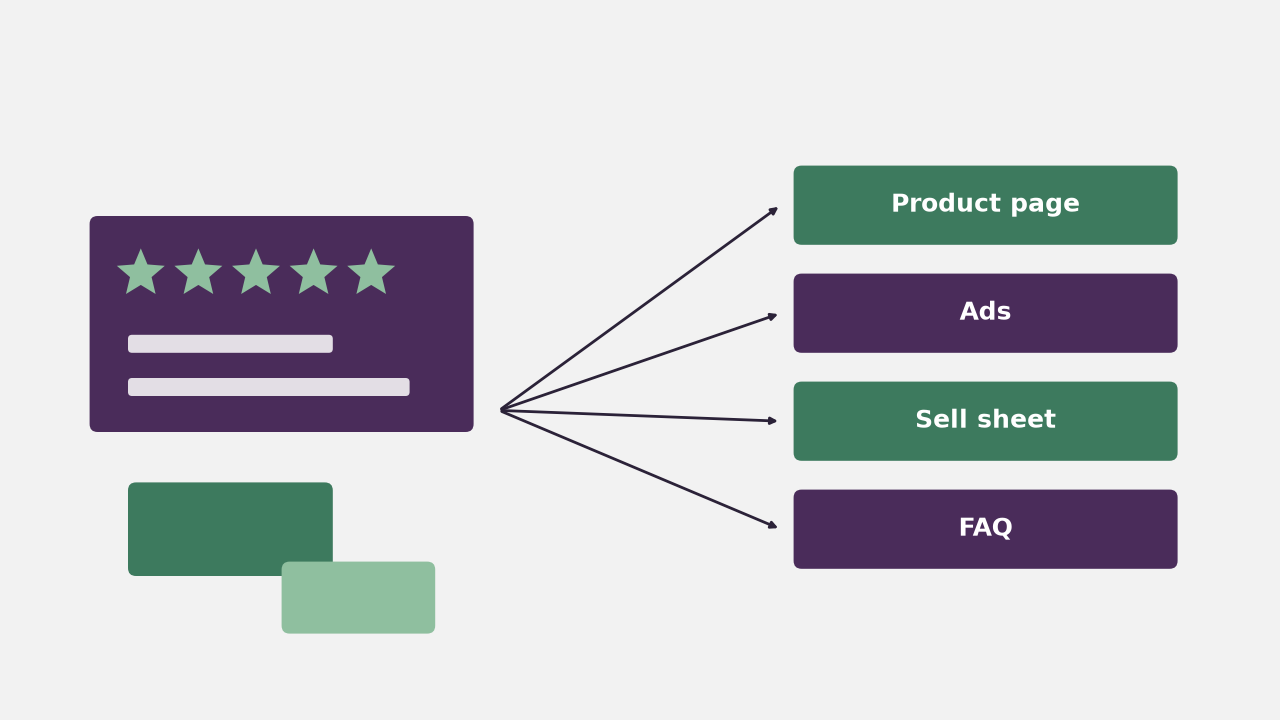
- Website product pages. Place two or three top customer phrases right near the price and purchase button. If multiple buyers say “finally a scent that freshens the room without triggering headaches,” feature that exact line on the page with credit.
- Advertisements. Test customer quotes as main headlines against your standard ad text. Real customer phrases often perform better because they sound like how real people talk.
- Retailer sales sheets. Store buyers want proof that shoppers keep coming back. A sales flyer showing your real rating and review count (for example, “4.7 stars across 1,200 reviews”) plus two short quotes about repeat purchases builds trust quickly. Only use verified numbers, and make sure health or safety statements comply with standard product guidelines.
- Social posts. Reshare permitted customer photos and video with credit.
- Frequently asked questions (FAQs). Your lower-rated reviews and support emails highlight where buyers get confused. Turn each recurring question or complaint into a clear question with a direct, simple answer on your sales page.
A word of caution for food, health, or beauty items: customers may make statements you cannot legally promise. If a review claims a product cured a condition, do not republish it. Product advertising rules apply to everything you share, regardless of who wrote it first.
Why customer quotes help online visibility
Customer reviews and FAQ sections do double duty. Standard search tools read them, and modern AI search tools use them to answer buyer questions. A page that answers real questions in plain language gives these systems clear text to reference. We cover this topic in more detail in our digital discovery guide.
Best practice: write each answer so the first sentence clearly answers the core question. Also, keep customer review text directly on the webpage as plain text, rather than hiding it inside images or embedded plug-ins that search tools cannot easily read.
What to measure
Track overall online sales conversion rates, review volume and ratings, and how many customer support inquiries you answer directly on your pages.
- Sales conversion rate: compare the percentage of visitors who purchase before and after adding review quotes and Q&A sections.
- Ad results: compare ads using real customer quotes against standard promotional ads.
- Review volume and star rating: track monthly review totals and the percentage of buyers who leave feedback.
- Support coverage: track how many common customer questions are answered directly on your product page before buyers need to email you.
Our founder has worked with consumer product businesses for decades and consistently sees the same result: the key selling point that convinces buyers is usually a phrase a customer used first. Tracking performance metrics shows exactly how much that real customer feedback improves sales.
Next step
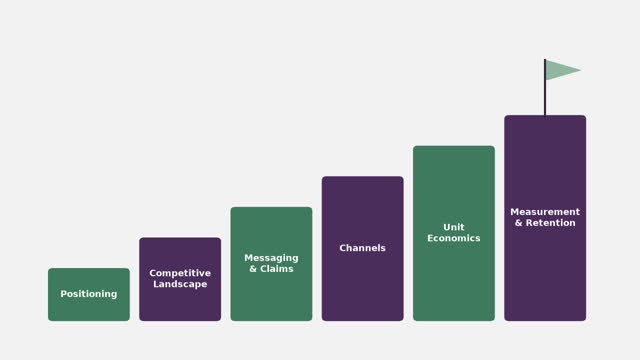
Customer proof is a key section in our free Launch Readiness Scorecard, covering Messaging & Claims as well as Measurement & Retention. You can complete it in about three minutes to evaluate your business. For a full guide, read what the scorecard evaluates.
At Vantage Business Consulting, we help brands turn authentic customer feedback into effective product descriptions, sales flyers, and web content that drives revenue.